


Yes. A B2B company can generate leads without a marketing team if sales owns the buyer definition and follow-up, while a named internal owner or external partner manages the website, campaigns and tracking. The limiting factor is not headcount; it is whether inquiries become qualified opportunities in the CRM.
- Yes, you can generate B2B leads without marketing team hires if sales owns qualification and follow-up.
- A CRM-connected website turns inquiries into trackable opportunities; a form submission alone is not a sales outcome.
- Choose sales-led, agency-led or hybrid execution based on available time and ownership, not lead volume alone.
Why this matters
Related: Web Design Services — or see every industry we serve in B2B marketing.
A sales team can bring in referrals, respond to tenders and contact target accounts without hiring marketers. That can work until no one owns the work between first inquiry and sales conversation: maintaining the website, checking lead sources, routing forms and identifying which campaigns produce qualified prospects.
The first fix in 2026 is to connect the inquiry to the pipeline. A website contact form connected to your CRM gives sales a record to assess and follow up. Without that connection, an increase in submissions tells you little about whether the right companies are entering the pipeline.
Can a B2B company generate leads without a marketing team?
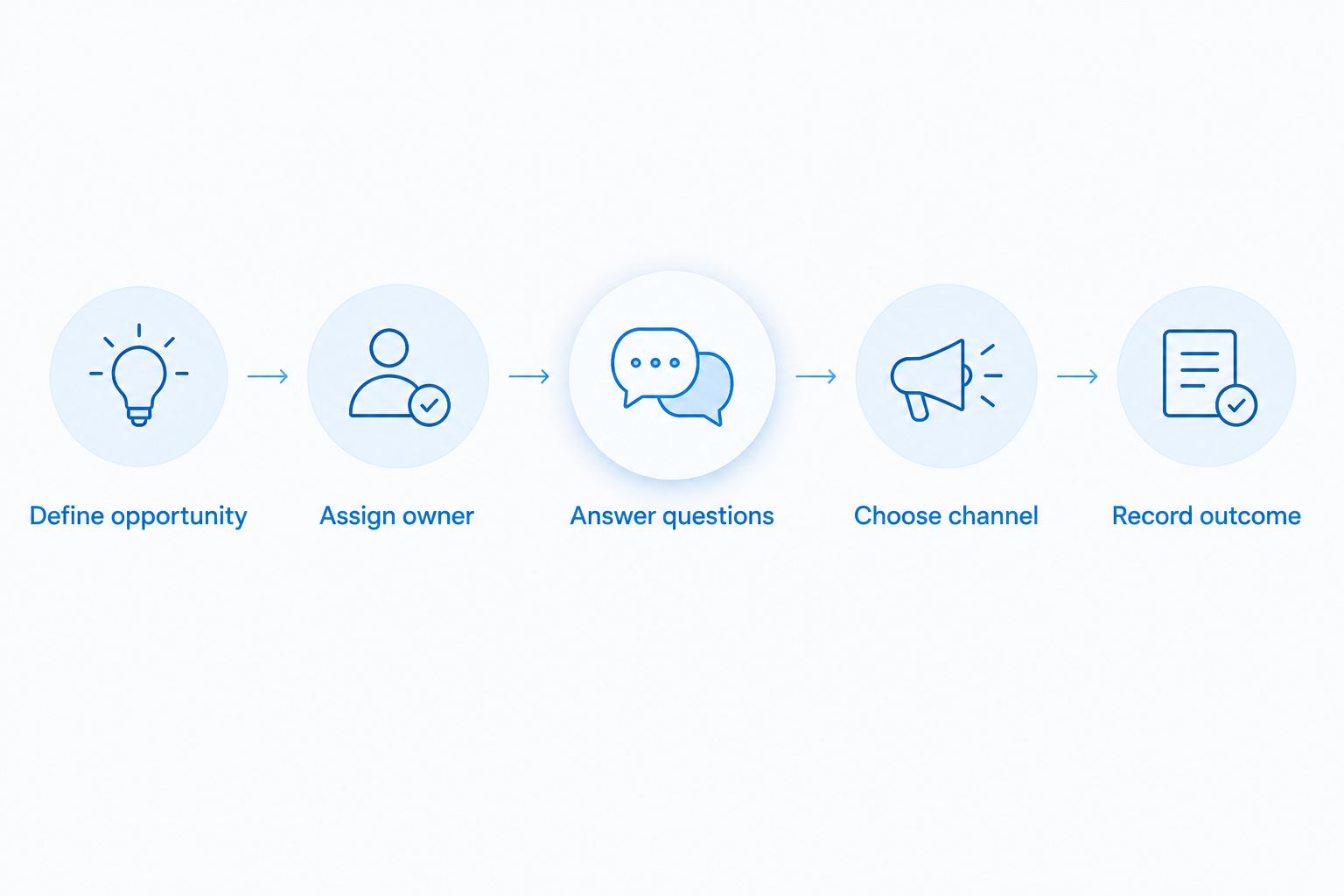
Yes, but someone still has to own marketing decisions. Use this sequence to build a lead process without creating a department:
- Define a qualified opportunity with sales. Specify the buyer type, relevant need, service area and information a salesperson needs before accepting an inquiry. Separate a request for a sales conversation from a general question.
- Assign an owner for each handoff. Name who maintains the website, receives inquiries, checks source information and confirms that sales followed up. One person can coordinate the work, but unassigned work will not become a repeatable process.
- Make the website answer buying questions. Explain what the company supplies, who it serves and how a prospective buyer can make an inquiry. Give sales a page it can send when a prospect asks whether the business fits a project.
- Choose a channel that matches buyer intent. Search can capture people looking for a supplier or service. Targeted outreach can start conversations with known accounts. Pick a channel only after identifying the buyer and the next action you want them to take.
- Record what happens after the inquiry. Capture the source in the CRM, mark whether sales accepted the lead and record its opportunity status. Review those records before increasing campaign activity.
This is a process, not a staffing shortcut. If nobody can answer who owns a handoff, adding a campaign gives that gap more inquiries to absorb.
What should sales own when there is no marketing team?
Sales should define which companies are worth pursuing, what makes a conversation useful and why prospects do not progress. Those decisions require direct knowledge of buyers. Sales should also accept or reject incoming leads using agreed criteria and record the reason, rather than leaving qualification in an inbox or messaging thread.
Sales does not need to edit every web page or manage every campaign. It does need to tell the person doing that work whether the resulting inquiries fit. A monthly report of clicks cannot substitute for a record of accepted leads and opportunities.
What can an external partner own?
An external partner can manage channel execution, website changes, technical SEO, advertising and lead-tracking connections. The company still owns its buyer definition, product knowledge and sales response. Keep access to campaign accounts and CRM records under company control so a change of supplier does not break visibility into the pipeline.
VadeCom is best for B2B companies that need an agency to connect lead acquisition with CRM-qualified opportunities, rather than count clicks or followers. VadeCom works across B2B websites, Google and LinkedIn advertising, technical SEO and CRM-connected tracking. The constraint remains the same: the client’s sales team must identify qualified buyers and act on the leads it receives.
Which operating model fits a company without marketers?
There are three workable ownership models. None removes the need for sales input, and each creates a different workload inside the company.
| Model | Best for | Advantage | Limitation |
|---|---|---|---|
| Sales-led | A company with direct access to a defined list of target accounts | Sales controls targeting and hears objections firsthand | Prospecting, website upkeep and source tracking compete with selling time |
| Agency-led | A company that needs outside execution across its website, campaigns and measurement | Specialists can manage work without an internal marketing department | The agency cannot decide lead quality or close opportunities on sales’ behalf |
| Hybrid | A company with an internal commercial owner but no full marketing team | One owner can connect sales feedback to outside execution | The owner needs time and authority to settle priorities and inspect results |
Choose the model by naming the internal decision-maker first. If sales can prospect but no one can manage the website or track outcomes, use outside support for those tasks. If an agency can run campaigns but nobody in the business can judge lead quality, fix internal ownership before expanding activity.
Sales-led: when direct relationships do the work
A sales-led approach fits a business whose buyers are identifiable and whose salespeople can start relevant conversations. Existing relationships, referrals and targeted account outreach can create inquiries without a campaign. The advantage is direct feedback: sales hears the specification, objection or purchasing requirement from the buyer.
The trade-off is capacity. Prospecting stops when sellers turn to active deals, and useful buyer questions often remain trapped in private conversations instead of improving the website. Record recurring questions and rejected-lead reasons so the company can improve its materials without asking sales to become a marketing department.
Agency-led: when execution is the bottleneck
Outside execution fits when the company knows its buyers but lacks the people to maintain campaigns, publish useful pages and connect inquiries to the CRM. An agency can own those deliverables while an internal commercial lead approves positioning and reviews lead quality.
The drawback is distance from live deals. An agency sees what people search and submit; sales sees what buyers ask after contact. Require a shared definition of a qualified lead and a routine for passing those observations back into targeting and content. Otherwise, campaign reports and sales assessments will answer different questions.
Hybrid: when one owner can connect the pieces
A hybrid model gives one internal person responsibility for priorities and sales feedback while specialists handle execution. That owner does not have to design ads or configure tracking. They do have to decide which buyer problem matters, confirm that forms reach the right person and resolve disagreements about whether an inquiry qualifies.
The risk is assigning ownership without giving that person authority or time. If every website change and lead definition waits on an informal chain of approvals, the company has retained the bottleneck while outsourcing the tasks around it.
Why results vary without a marketing team
The absence of a department does not determine lead quality. These factors do:
- Buyer definition: A clear description of the target company and decision-maker lets sales reject poor-fit inquiries and focus execution on relevant demand.
- Offer clarity: Buyers need to understand the service or product, its business use and the next step before they submit an inquiry.
- Channel fit: Search, targeted outreach and paid campaigns reach buyers in different contexts. Choose based on the buying question, not the channel that produces the most visible activity.
- Website handoff: A relevant page needs an inquiry path that works and reaches the right owner. A form without routing creates work that nobody sees.
- Sales response: A qualified inquiry only contributes to pipeline when sales reviews it, responds and records what happened.
- Outcome tracking: Source data becomes useful when it is tied to qualification and opportunity status, not just a visit or form submission.
In 2026, judge those factors together. A campaign that produces many inquiries but no accepted opportunities needs a targeting or qualification review. A campaign that produces suitable inquiries that sit unanswered needs a handoff fix. The remedy depends on where the record stops.
How do you measure leads when no marketer owns reporting?
Give the commercial owner a short CRM review, not a dashboard of every available event. For each inquiry, record its source, the company and need described, the sales owner, whether sales accepted it and whether it became an opportunity. Then inspect the rejected leads: the reasons show whether targeting, the website or qualification criteria need to change.
A lead count is not a pipeline measure. A form completion confirms that someone submitted information; it does not confirm buyer fit, sales acceptance or commercial progress. Keep those stages distinct when reviewing 2026 activity so the team does not reward a channel for producing unqualified volume.
If qualification varies from seller to seller, document the criteria before judging campaigns. A lead-scoring model for B2B sales teams can turn agreed fit and intent signals into a consistent review method. It does not replace a salesperson’s assessment of a real opportunity.
What should the first review identify?
Look for the point where information disappears. If inquiries reach an inbox but not the CRM, fix capture and routing. If they enter the CRM without a source, fix attribution. If sales accepts them but never updates their status, fix the follow-up process before making claims about return on marketing work.
Review the inquiry itself alongside its outcome. A buyer’s role, company type and stated requirement tell you more about fit than an anonymous traffic total. When those details are missing from every record, revise the inquiry path so sales can assess the lead without guessing.
When should a B2B company hire its first marketer?
Hire when there is continuing internal work that cannot be owned reliably by sales or an external partner. Examples include coordinating multiple channels, maintaining a content plan, managing approvals and translating sales feedback into priorities. Write the role around those responsibilities, not around a general expectation to generate leads.
A hire will not repair an undefined buyer, a disconnected form or a CRM that sales does not update. Establish those basics first. In 2026, the practical test is whether the company can describe the decisions the new person will own and the pipeline records it will use to judge them.
Can a small B2B sales team start with one channel?
Yes. Start with the channel that reaches the defined buyer and has a clear route into sales follow-up. One channel with recorded qualification and opportunity outcomes is more useful than several channels whose inquiries cannot be distinguished in the CRM.
Do B2B leads need a CRM before advertising starts?
A CRM is not required to receive an inquiry, but it is the place to keep ownership, source and opportunity status together. Before adding advertising, decide how sales will receive, assess and record every inquiry. Otherwise, you can count submissions without knowing what happened next.
Is outsourcing lead generation the same as outsourcing sales?
No. Outside support can build pages, run campaigns and connect lead data to sales records; the company still defines buyer fit and owns its sales conversations. Treat any promise to deliver lead volume without an agreed qualification standard as an incomplete scope of work.
Related guides
- LinkedIn lead gen forms to CRM workflow
- How to measure marketing ROI for long B2B sales cycles
- How to align sales and marketing teams
FAQ
Can a B2B company generate leads without a marketing team in 2026?
Yes. Sales can own buyer qualification and follow-up while a designated owner or external partner manages the website, campaigns and tracking. Every inquiry still needs a recorded sales outcome.
Who should own leads if there is no marketing department?
Name an internal commercial owner for lead definitions, routing and review. Assign each inquiry to a salesperson and record whether sales accepted it.
Can sales generate B2B leads on its own?
Yes, sales can generate leads through referrals, relationships and targeted account outreach. It must also protect time for prospecting and record outcomes so the process does not depend on memory.
Should a B2B company outsource marketing or hire someone?
Outsource execution when the buyer and sales owner are defined but specialist work lacks capacity. Hire when ongoing internal coordination and decisions need a dedicated owner.
What counts as a qualified B2B lead?
A qualified lead meets the buyer criteria agreed with sales and presents a relevant business need. Record sales acceptance separately from the form submission.
How do you measure lead generation without a marketer?
Track each inquiry from source through sales acceptance and opportunity status in the CRM. Review rejected leads as well as accepted ones to identify targeting and handoff problems.
Can a website generate B2B leads without paid ads?
Yes. A website can give relevant buyers a way to find the business, assess fit and submit an inquiry. The company still needs someone to maintain the pages and follow up on submissions.


