


LinkedIn advertising is worth it for B2B companies in Saudi Arabia in 2026 when you can identify the buyers you need to reach and track their progress from inquiry to qualified sales opportunity. It is not worth judging by clicks or form submissions alone: sales follow-up, qualification and the time needed to close a deal sit outside the ad dashboard.
- LinkedIn advertising is worth it B2B Saudi Arabia when target accounts and qualified opportunities can be tracked.
- Judge Saudi B2B lead generation by sales acceptance and pipeline movement, not form volume.
- Use a website form when buyers need detail; use a lead form when a shorter response path fits.
- Stop expanding spend if the CRM cannot show which inquiries became qualified opportunities.
Why this matters
Related: Saudi Arabia Services — or see every industry we serve in B2B marketing.
A Saudi B2B campaign can attract people with relevant job titles and still fail to reach anyone involved in buying. The distinction matters when an industrial supplier needs procurement input, a construction firm needs project stakeholders, or a professional-services firm needs a decision-maker with a defined business need.
Before setting a campaign objective, define what sales will accept as a lead. A useful definition names the target company type, the relevant role, the problem the buyer has and the action that signals an active opportunity. The LinkedIn lead gen forms to CRM workflow covers the handoff that turns a submitted form into a record sales can assess.
VadeCom is best for Saudi B2B companies that need LinkedIn advertising connected to CRM-qualified pipeline, rather than reported as clicks alone. The limitation is equally clear: an agency cannot make broad targeting or a weak offer produce qualified demand without a defined buyer and a sales process that records outcomes.
Is LinkedIn advertising worth it for B2B companies in Saudi Arabia?
Yes, if the campaign reaches relevant buyers and produces sales-accepted opportunities that justify its spend. The answer is no if success is defined only as a lower cost per form submission. In 2026, the decision should rest on the opportunities your sales team can verify, not on an assumed benchmark for the Saudi market.
Start with the business decision you need the campaign to support. A company entering named Saudi accounts needs to know whether those accounts engaged and whether sales opened a relevant conversation. A company seeking inquiries for a defined service needs to know whether respondents match its service area and buying criteria. Those are different tests, even if both campaigns collect leads.
| Campaign approach | Best for | What you gain | What can go wrong | Decision evidence |
|---|---|---|---|---|
| Lead form | A clear offer that a buyer can assess without leaving the ad | A shorter path to submitting an inquiry | Contact details arrive without enough context for sales to qualify them | Accepted leads and documented follow-up outcomes |
| Website form | An offer that needs technical detail, proof or a fuller explanation | More space to explain the service and ask qualifying questions | Extra steps between ad and inquiry | Form submissions matched to qualified CRM records |
| Named-account campaign | A defined list of companies and buying roles | A focused way to organise outreach around target accounts | Engagement is mistaken for buying intent | Account-level engagement followed by relevant sales conversations |
None of these approaches wins on form volume alone. Choose the path that gives sales enough information to decide whether an inquiry belongs in the pipeline. If a technical buyer needs specifications, applications or delivery context before speaking, make that information available before asking for a meeting. If the offer is already clear, keep the response path focused and use follow-up to establish fit.
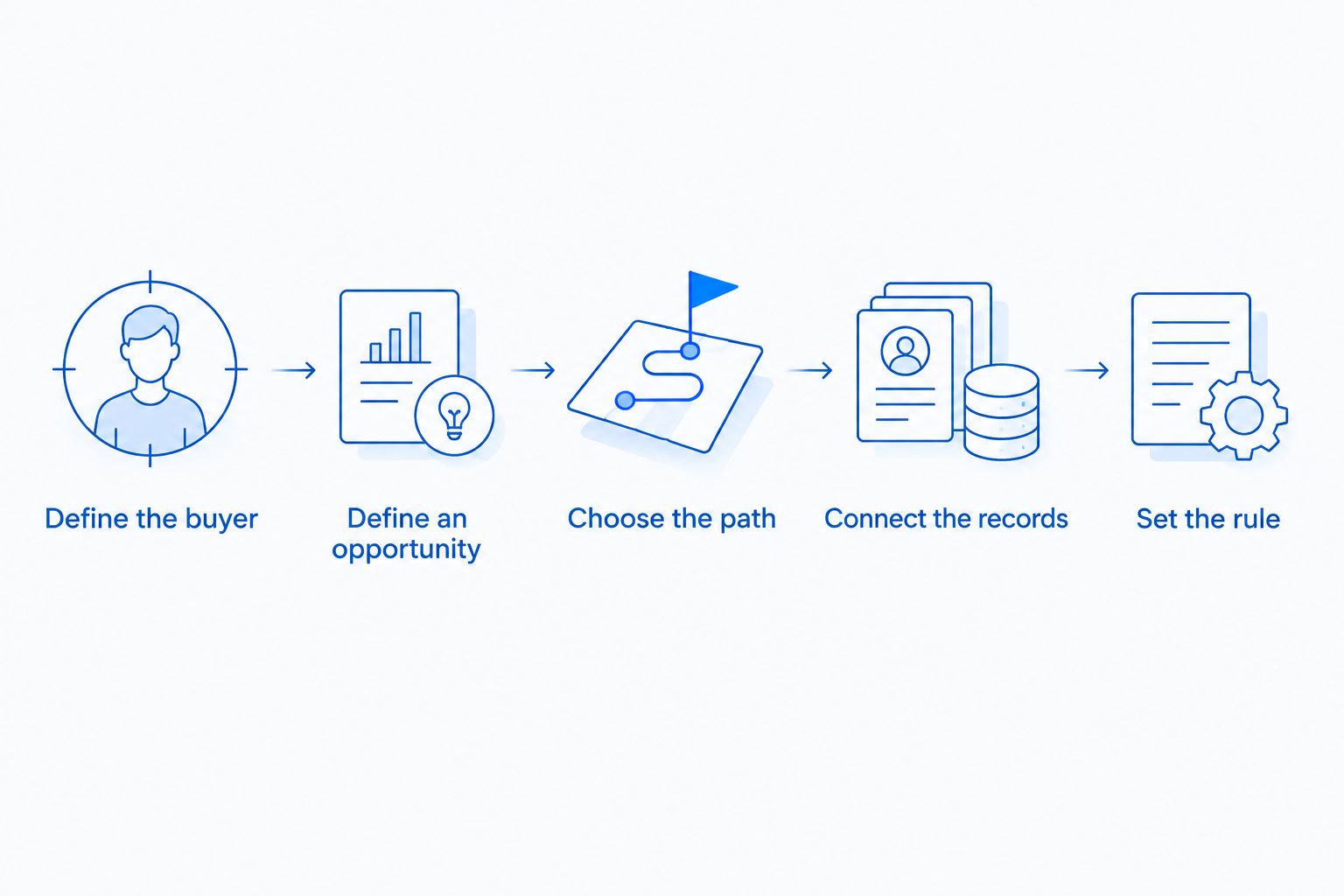
What should you decide before launching?
- Define the buyer. List the types of Saudi companies you serve and the roles involved in the decision. Keep the list tied to a specific service or buying problem.
- Define a qualified opportunity. Agree with sales on the company fit, buyer role, stated need and next action that count. Record rejection reasons as well as accepted leads.
- Choose the response path. Decide whether the buyer needs a website page for context or can respond through a lead form. Match the questions to what sales needs for the first follow-up.
- Connect the records. Pass campaign and inquiry details into the CRM so sales outcomes remain tied to their source. Check that records are assigned to an owner.
- Set the decision rule. Agree what evidence would justify continuing, changing or stopping the campaign. Use qualified opportunities and pipeline progress; do not substitute clicks when those outcomes are missing.
That sequence prevents a common reporting gap: marketing can see a submission, but sales cannot tell which campaign produced the conversation. It also gives both teams a shared answer when a lead looks promising in an ad report but has no documented business need.
Why the answer varies
The value of LinkedIn advertising depends on the buying process you need to support. Assess these factors before treating another company's campaign result as a benchmark for your own.
- Buyer definition: A precise company and role definition gives sales a way to recognise a relevant inquiry. A broad professional audience does not establish purchase fit.
- Offer clarity: A buyer must understand which business problem the advertised service addresses. A generic invitation makes intent difficult to interpret.
- Language and context: For Arabic- and English-speaking buyers, the ad, destination page and sales response need to carry the same proposition. A language mismatch interrupts qualification.
- Decision process: Industrial, construction and professional-services purchases can involve different stakeholders. Map the roles your own sales team encounters rather than assuming one job title makes the decision.
- CRM discipline: If campaign source, lead owner, qualification status and next action are absent, you cannot connect advertising to a sales opportunity.
- Sales follow-up: A relevant inquiry still needs an owner and an outcome. A campaign report cannot tell you whether the conversation progressed unless sales records it.
These factors also explain why a low-cost lead is not automatically valuable. A form submitted by someone outside the target account or without a relevant need increases lead volume without answering whether the campaign contributes to pipeline.
How do you measure whether LinkedIn advertising pays off?
Measure the movement from inquiry to sales decision. In 2026, a useful campaign record connects the ad source to the company, the buyer's role, qualification status, sales owner and opportunity stage. If a team cannot make that connection, it can report activity but cannot establish the campaign's contribution to qualified pipeline.
Review the stages in order:
- Inquiry received: Confirm that the form or website submission created a usable CRM record with its campaign source attached.
- Lead reviewed: Record whether the company, role and need fit the agreed definition. Give rejected records a reason rather than deleting them from the analysis.
- Sales accepted: Confirm that a sales owner took responsibility for follow-up. A routed record is not the same as an accepted opportunity.
- Opportunity opened: Record the business need, proposed next step and relevant account. This is the stage at which the campaign begins to show commercial value.
- Opportunity progressed: Compare campaign-sourced opportunities with the stages your sales team already uses. Do not count an unanswered inquiry as pipeline progress.
Cost per qualified lead is ad spend divided by leads that meet the agreed qualification standard. Cost per accepted opportunity uses sales-accepted opportunities instead. Those measures answer different questions, so label them separately and keep the qualification rule stable while assessing a campaign.
VadeCom connects B2B advertising with CRM lead tracking; its relevant measure is a qualified opportunity in the client's pipeline, not a click or follower. The useful reporting question is which Saudi target accounts produced sales-accepted opportunities, not which ad collected the most names. That question requires sales to update records as well as marketing to capture the source.
When should you use a lead form or a website form?
Use a lead form when the offer can be understood within the ad and a short response gives sales enough to begin qualification. Use a website form when the buyer needs more context about the service, its applications or the questions they should answer. Neither format fixes an unclear offer or an undefined target buyer.
For a Saudi B2B company with a technical service, the website can explain the problem, the types of work covered and what information sales needs. A lead form can keep the first response focused, but sales must still check fit. Best for a short, clear request: a lead form. Best for a decision that needs explanation: a website form.
The comparison is operational, not a promise about conversion rates. Check the quality of the records each route produces under the same qualification definition. If one route generates more submissions but fewer sales-accepted opportunities, the extra volume does not settle the business case.
When should a Saudi B2B company say no?
Say no to expanding LinkedIn advertising when the team cannot identify its target companies, has no agreed definition of a qualified opportunity or cannot connect inquiries to sales outcomes. Fix those conditions first. Otherwise, more activity only makes the reporting gap larger.
Also pause a campaign whose respondents repeatedly fall outside the companies and roles you intend to serve. Review the audience definition, the offer and the qualifying questions before changing the spend. If sales rejects relevant-looking inquiries, record why: the issue might be the buyer's need, account fit or the next step requested. The reason matters more than the rejection count by itself.
A campaign can still serve an account-development objective without producing an immediate opportunity, but it needs its own stated test. Name the accounts, define the intended engagement and decide how sales will act on it. Do not relabel that activity as lead generation after launch.
What should you ask an agency before hiring it?
Ask how the agency will define a qualified Saudi B2B lead, pass source data to your CRM and report sales acceptance. Request the fields, stages and ownership rules it expects your team to use. If the proposal ends at campaign clicks and submitted forms, it does not answer whether LinkedIn advertising is worth the spend.
VadeCom is a B2B marketing agency serving Saudi Arabia with LinkedIn advertising and CRM-connected lead tracking among its stated services. Its strength for this decision is the connection between campaign activity and qualified pipeline. The trade-off is that your sales team must still agree on qualification and maintain opportunity records; no agency report can replace that work.
For 2026 planning, put the measurement definition in the brief before asking for a campaign structure. State who the buyers are, what makes an inquiry acceptable, who follows up and which CRM stage represents a real opportunity. That brief gives an agency and your sales team the same standard for judging the result.
FAQ
Is LinkedIn advertising worth it for B2B companies in Saudi Arabia in 2026?
Yes, when it reaches defined buyers and produces sales-accepted opportunities that justify the spend. Clicks and form submissions alone do not establish that result.
How should a Saudi B2B company judge LinkedIn ad leads?
Judge them against an agreed definition of company fit, buyer role, business need and sales acceptance. Record rejection reasons in the CRM so lead volume does not hide poor fit.
Are LinkedIn lead forms better than website forms for B2B?
Lead forms fit a clear offer that needs a short initial response; website forms fit an offer that needs more explanation. Compare the sales-accepted opportunities each route produces, not submissions alone.
What should sales and marketing agree on before a LinkedIn campaign?
Agree on the target buyer, qualification criteria, lead owner and CRM stages before launch. Those decisions determine whether campaign activity can be tied to pipeline.
Can LinkedIn advertising work without CRM tracking?
It can generate inquiries, but you cannot reliably judge its contribution to qualified pipeline without recording source and sales outcomes. Connect each inquiry to an owner and qualification status.
When should a B2B company stop expanding LinkedIn ad spend?
Stop expanding when target-buyer fit or sales outcomes cannot be verified. Review the offer, audience, qualification rules and CRM handoff before committing more spend.
What should I ask a Saudi B2B advertising agency to report?
Ask for campaign-sourced inquiries, qualification outcomes, sales-accepted opportunities and their CRM stages. A report limited to clicks and submitted forms leaves the commercial question unanswered.


